In our recent leaderboard analysis, we noted that reputation performance across senior living brands is becoming more spread out. Strong operators continuing to improve while others fall behind.
But those changes aren’t happening evenly across portfolios. They’re happening in a very specific place: The middle.
Across the industry, most communities fall into what we would consider the “middle tier” of reputation performance, with an SLR Score™ between 75 and 90.
These communities aren’t broken. They often have solid ratings and generally positive feedback.
But they also tend to have gaps: in review recency, review volume, or recent review trends. What’s most important about middle-tier communities isn’t where they sit today.
It’s which direction they’re moving.
More than 57% of communities saw no change in their Google rating over the past several months.
On the surface, that suggests stability.
But underneath, reputation performance is actively shifting. Looking deeper at the data:
More than half of communities saw their reputation performance decline even though ratings were largely stable.
This reinforces a key point: reputation performance is constantly moving, and more often than not, it’s drifting downward.
What’s striking in the data is how subtle many of these declines are.
Aegis Living Corte Madera moved from 11 to 12 months since its last positive review. The impact of that one month is small on the calendar but big on how Google treats it, moving from listing it as "11 months ago” to now show it as “a year ago”.
With this perception of ‘freshness’ shifts and the SLR Score dropped to 73.5
All American At Enfield has not received a positive review in over 8 months, then picked up a 1-star review last month. While the community’s rating remains a solid 4.4, its SLR Score fell as the overall perception of the community has eroded.
What’s notable here is that nothing dramatic changed. The rating remained stable, but the recent negative review stands out like a sore thumb and reputation performance declined.
Brookdale Auburn saw its rating drop 4.0 to 3.9, which puts it in a new ballpark. This dip below the 4.0 threshold eliminates it from consideration for many prospects, and with the the change the SLR Score from from from 83.3 to 66.4.
This small numerical change in the rating results in a major change in visibility and perception.
Upward improvement happens when multiple KPIs begin to move together, often starting with recency and then reinforcing through volume.
Communities that improve often begin by simply generating new reviews again. This resets recency and signals activity. As an example Mill Creek Alzheimer's Special Care Center had gone over a year since its last positive review, but then generated one in Febuary to push it out of the Middle Tier and into the Top Tier.
Consistent review generation builds momentum over time, and gives prospective resiidentts and families confidence that the community is an active, engaging one.
As these improvements compound, communities begin to cross key thresholds and as a result moving into higher-performing tiers. Addington Place of Lee’s Summit improved its rating from 3.8 to 4.0 and saw its SLR score increase by almost 30 points, reflecting how multiple KPI improvements can drive significant upward movement.
One of the most consistent patterns in the data is what happens when communities don’t actively manage their reputation.
At first, nothing appears to change.
But over time reviews slow and profiles become stale
A helpful way to think about this is like a piece of fresh fruit.
At first, it’s ripe, appealing, and full of potential. But left sitting on the counter:
Not because something dramatic happened, but because nothing happened. In online reputation, inactivity isn’t neutral: it leads to decline.
The highest-performing brands don’t just focus on their top communities or react to their lowest-performing ones.
They actively manage the middle.
That means:
Over time, that focus creates more consistency across the portfolio and stronger overall reputation performance.
Reputation performance isn’t static.
Communities are constantly moving, even if that movement is gradual.
The most important question isn’t where your communities rank today, instead it’s which direction they’re heading.
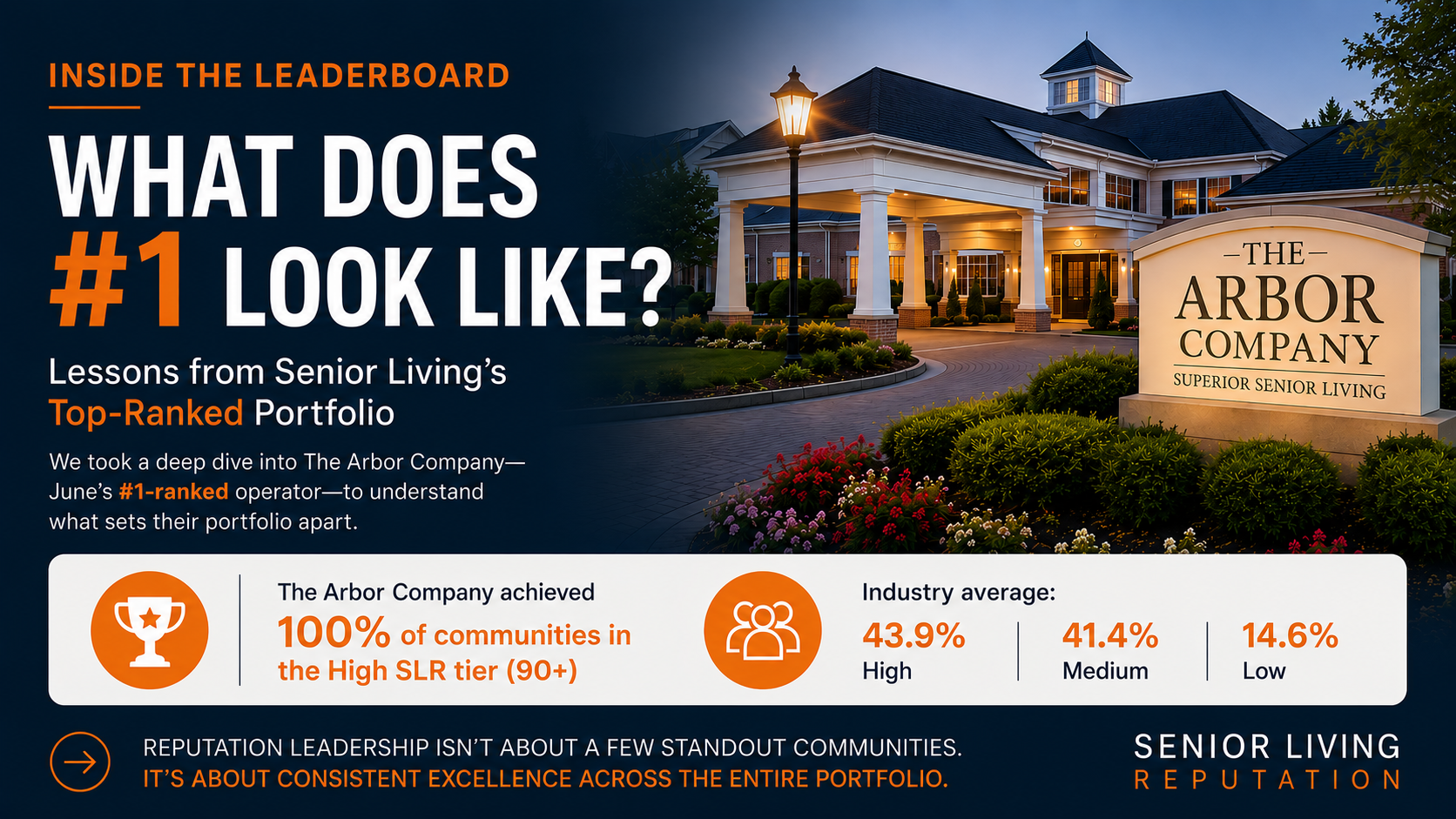
What does a top-ranked reputation portfolio actually look like? We examined The Arbor Company's June performance to understand what separates the industry's leaders.
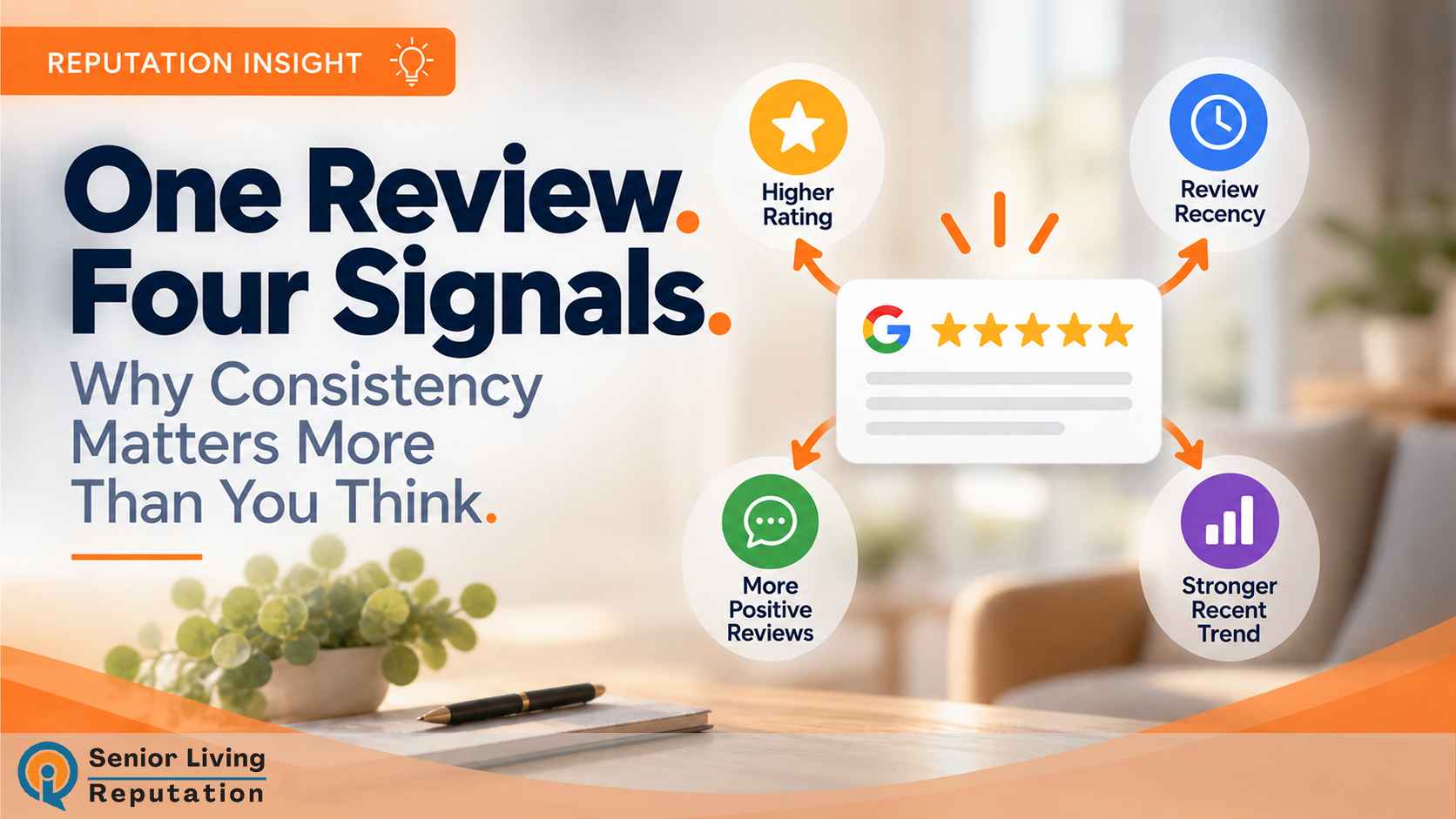
A single positive review does more than improve your Google rating. It strengthens four key reputation signals that shape how prospective residents and families evaluate your community.